Date: 2011
Type: Book
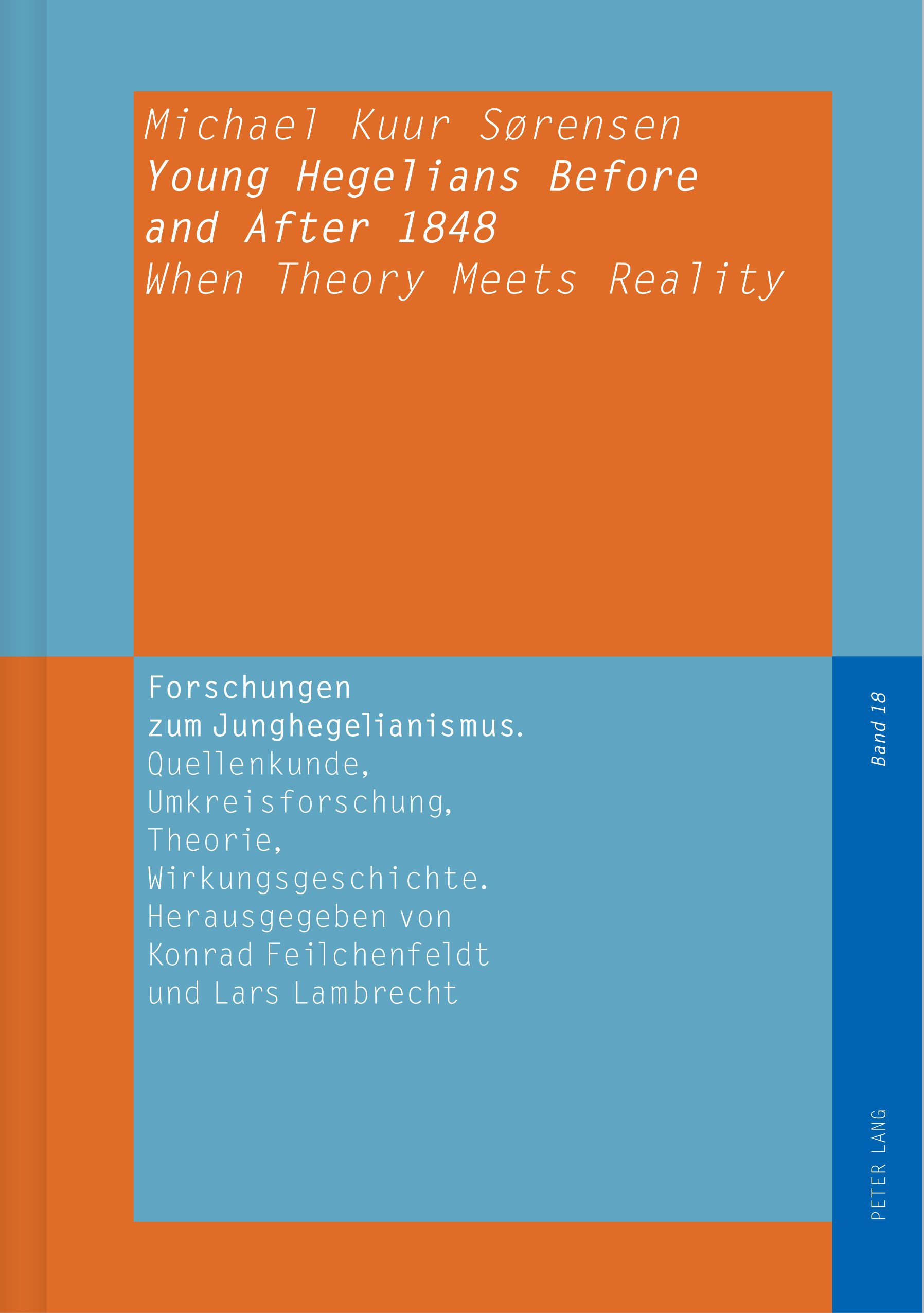
Young Hegelians before and after 1848 : when theory meets reality
Frankfurt am Main ; Peter Lang, 2011, Forschungen zum Junghegelianismus, 18
SORENSEN, Michael Kuur, Young Hegelians before and after 1848 : when theory meets reality, Frankfurt am Main ; Peter Lang, 2011, Forschungen zum Junghegelianismus, 18
- https://hdl.handle.net/1814/19294
Retrieved from Cadmus, EUI Research Repository
This book shows that the 1848 revolutions played a key role in the development of the political thought of the Young Hegelians, Arnold Ruge, Bruno Bauer, Moses Hess and Karl Marx. They all developed revolutionary ideas in the 1840s and hoped for revolutionary events as those that occurred in 1848, but their theories failed to predict the outcome of the revolution. By an empirical analysis this work clearly demonstrates that the Young Hegelians under study changed their theoretical outlooks as a direct result of the 1848 revolutions. It is argued that the mechanism for this change is intellectual disillusionment, that these intellectuals became disillusioned with the theories they had developed in the 1840s because they experienced the 1848 revolutions as an intellectual failure. The book examines the question of how intellectuals deal with their failure to predict the world, and how theory and the change of theory are related to actual historical events.
Table of Contents:
-- Introduction - Between Revolution and Reaction
Chapter 1 - Their Experience of the Political Context
Chapter 2 - Their Experience of the Intellectual Context
Chapter 3 - Religion and the Realisation of Philosophy
The Realisation of Philosophy 83 | Rejecting the Content of Religion
Chapter 4 - The Future Organisation of Society
Chapter 5 - Theories of History before 1848
Chapter 6 - Enthusiasm and Disillusionment
Chapter 7 - New Theoretical Outlooks 209
-- General Conclusion
-- Bibliography
Cadmus permanent link: https://hdl.handle.net/1814/19294
ISBN: 9783631620540
ISSN: 1430-9998
Publisher: Peter Lang
Initial version: http://hdl.handle.net/1814/14703
Version: Published version of EUI PhD thesis, 2010
Files associated with this item
- Name:
- Sorensen_2011.jpg
- Size:
- 422.7Kb
- Format:
- JPEG image
- Description:
- Cover Sorensen (2011)